Think Your Ad Strategy Still Works in 2023?
Get the most comprehensive guide to building the exact workflow we use to drive kickass ROAS for our customers.


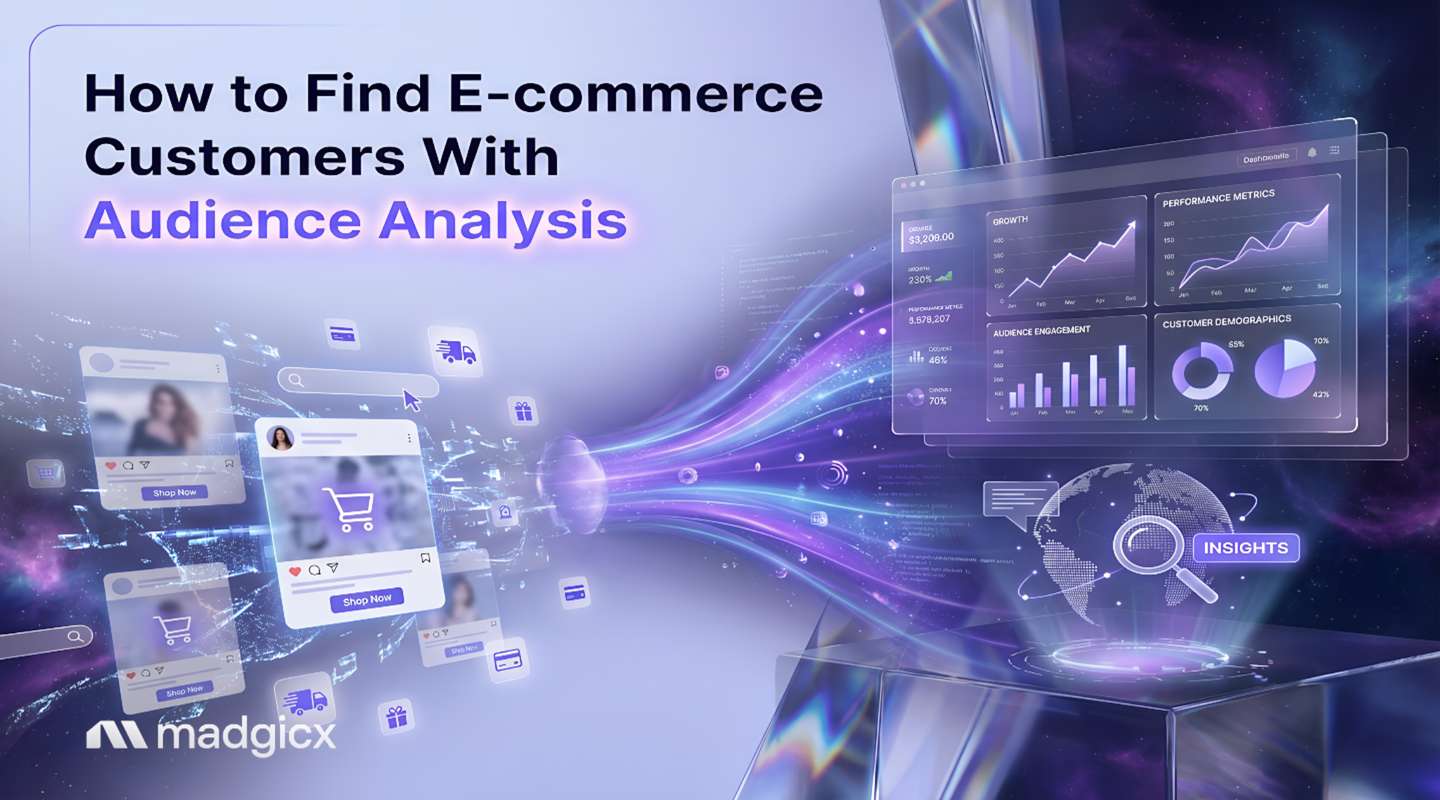
You're running a successful e-commerce store, but scaling feels like a guessing game. You're pouring money into Meta ads, but are you really reaching the right people? Our e-commerce guide to finding your target audience can help you answer that question.
You’re running a successful e-commerce store, but scaling still feels like a guessing game. You’re investing in Meta ads, but you’re not always sure if you’re reaching the right people. That’s where audience analysis comes in.
Audience analysis helps you move beyond a basic target market definition and understand who your best customers really are—the ones who buy repeatedly and drive long-term growth. By analyzing data from Shopify, Google Analytics, and Meta Ads, you can build a clear, evidence-based picture of who buys from you, what motivates them, and why they choose your brand.
For e-commerce brands, this deeper understanding is what turns scattered campaigns into consistent, predictable performance.
This guide is a practical, step-by-step playbook for busy store owners. You’ll learn how to turn raw data into targeted campaigns that attract the right customers, improve ad efficiency, and drive real revenue.
Let’s be honest, running Meta ads can sometimes feel like you’re just throwing spaghetti at the wall to see what sticks. You get some sales, sure, but you know there’s wasted ad spend lurking in the shadows, eating away at your profits.
Slow growth, inconsistent results… sound familiar?
Here’s a little secret: your biggest competitive advantage is hiding in plain sight. According to a 2024 study cited by SparkToro, over 41% of marketers admit they don't do enough audience research. This is your chance to get ahead.
When you truly understand your audience, the results can be huge. Engine CX Design reported that by using personas, Vodafone's retail sector saw a mind-blowing 6,000% ROI. A fashion brand generated an extra $92,000 in revenue in just 45 days simply by segmenting its audience.
For your e-commerce store, this translates directly to:
In a world where 71% of consumers expect personalized communications, audience analysis isn't just a nice-to-have. It's the engine that powers effective scaling.
Okay, so "analyzing your audience" sounds a bit vague. Let's break it down into three simple layers of data—or types of audience—you can start collecting today.
Quick Tip: While all three are important, behavioral data is the most powerful predictor of future purchases. Someone who has bought from you before is your hottest lead. Period.
Ready to get your hands dirty? Here’s the exact 7-step process we use to turn data into dollars.
First things first, what are you trying to achieve? You can't find the right answer if you don't ask the right question. Are you:
Your goal will determine where you focus. For example, to increase LTV, you’ll analyze your repeat buyers. To find new customers, you’ll analyze your best first-time buyers. Simple.
You’re sitting on a mountain of valuable data—you just need to know where to look. Don't get overwhelmed; start with these four sources:
This is where the real magic happens. Instead of looking at your customers as one big blob, we're going to group them into meaningful segments.
The most powerful way to do this for e-commerce is with RFM Segmentation (Recency, Frequency, Monetary value). It’s a simple way to identify your best customers based on their buying habits.
Here are a few essential segments to create:
Now, let's bring these segments to life. A persona is a fictional character that represents your ideal customer, turning a spreadsheet of data into a relatable human being. You can look at various target audience examples for inspiration, but let's create one right now.
Don't overcomplicate it. Create 1-2 simple personas based on your "High-Value Champions" segment. For example:
Pro Tip: Giving your persona a name and a face makes it so much easier for your team to create ads that speak directly to them. Check out these examples of high-performing e-commerce customer personas for more inspiration.
This is the moment we’ve been waiting for—turning research into profitable action on Meta.
Audience analysis isn't a "set it and forget it" task. Your customers' behaviors evolve, and so should your strategy.
Your key success metric is simple: are the campaigns targeting your specific segments outperforming your broad campaigns? If your "High-Value Champions" Lookalike has a 5x ROAS while your broad campaign is at 2x, you're on the right track. ✨
Pro Tip: A Cintell study found that 63% of companies that exceeded revenue goals had updated their personas within the last six months. Set a calendar reminder to refresh your personas and segments every 6 months. Seriously, do it now!
Let's be real: manually creating, testing, and monitoring all these audiences is a massive time sink.
This is where AI-powered optimization becomes your best friend. Madgicx's AI Marketer analyzes your audiences 24/7. It identifies winning and underperforming segments, giving you one-click recommendations to reallocate your budget toward what’s working.
And when you have a question like, "Which Lookalike audience is performing best this week?" just ask Madgicx's AI Chat. You'll get a quick, easy-to-understand answer. It's like having a data analyst on your team, available 24/7.
You don't need a massive budget to get started. Here’s a curated list of tools for every stage.
It helps you identify your most profitable products and customer types. You'll know which products to feature in ads and which customers to build Lookalike audiences from, directly impacting your store's profitability and bottom line.
Absolutely! The best part is that it starts with data you already own. Begin with free tools like Google Analytics and your Shopify data. The insights you gain will make your small budget work much harder.
It’s more important than ever. With challenges in pixel tracking, your first-party data (from Shopify, email lists, etc.) is your most reliable asset. Building Custom Audiences from this data gives Meta higher-quality signals to work with, which is a huge help in this post-iOS world where tracking can be tricky.
You don't need a massive research team or a PhD in data science to understand your audience. You just need a process and the willingness to listen to what your data is telling you.
By following this 7-step framework, you can move from guessing to knowing—knowing exactly who your best customers are, what they want, and how to find more of them.
Your first step is simple. After you finish this article, log into your Shopify analytics and identify your top 10% of customers by total spend. That list is the seed of your first high-value audience. You're already on your way.
When you're ready to put these insights to work with AI-powered optimization and scale your Meta ads with confidence, we're here to help you make it happen.
Stop wasting time manually decoding Meta ad performance. Madgicx’s AI Marketer analyzes your campaigns 24/7, identifies winning audience segments, and delivers clear, actionable recommendations—so you can shift budget to what’s working and cut wasted spend faster.
.avif)
Digital copywriter with a passion for sculpting words that resonate in a digital age.