Discover the benefits of retargeting and why retargeting ads still work for reconnecting with your audience, boosting conversions, and lifting ad performance.
Ever browsed a website, left without buying, and then seen ads for that product everywhere you go online?
That’s retargeting in action—a powerful advertising strategy that keeps your brand front and center for people who’ve already shown interest. Today, retargeting remains a cornerstone of digital advertising for one simple reason: it works.
In this article, we’ll break down what retargeting ads are and how they differ from remarketing. We’ll also explore the benefits of retargeting, the various types of retargeting ads you can leverage, and the platforms that make them effective, such as Google, Facebook, and Instagram.
Madgicx is the ultimate platform for Meta ads, offering everything you need to find, target, and optimize your retargeting campaign. Choose from over 50+ pre-made audience segments with Audience Launcher, use AI Ad Image Generator to create high-converting creatives in seconds, and optimize campaigns with the help of your own AI media buying assistant - the AI Marketer.
What are retargeting ads?
While retargeting and remarketing are often used interchangeably, they’re not quite the same thing. Both strategies aim to reconnect with past visitors or customers, but they differ in approach and execution.
How Retargeting Works, Step by Step
Retargeting follows people who have already shown interest in your store and shows them relevant ads later. The process is simpler than it sounds.
- A visitor arrives. Someone views a product page, adds an item to the cart or watches one of your videos.
- A tracking tag records the visit. A pixel or similar tag on your site notes which action the person took.
- The person joins an audience. The platform places them in a group such as product viewers or cart abandoners.
- Your ad appears later. While the person browses other sites or apps, they see an ad matched to what they looked at.
- They return and convert. The ad brings them back to the product, and many buy because the product is already familiar.
The key is relevance: someone who abandoned a cart needs a different message from someone who only read a blog post.
Differences between retargeting and remarketing
Retargeting focuses primarily on online ads. It uses tracking tools, like cookies or pixels, to follow users across platforms and deliver ads based on their online behavior. For instance, a pixel-based retargeting ad might show a product someone viewed on your website in their Instagram feed later that day.
Remarketing, on the other hand, typically involves other marketing activities besides ads aimed at re-engaging previous customers or leads, like sending an email to a prospect who didn't complete their purchase. Take this great example from Liquid Death:

Benefits of retargeting ads
Because retargeting ads focus on users who’ve already engaged with your brand, marketers typically see high engagement and conversion rates from them. In fact, people are 3x more likely to click on a retargeting ad than those who haven't interacted with your brand before.
Access to our phones allows us to shop on the go—on trains, in the middle of a line, or even at work (it'll be our secret). Unfortunately, this makes it common for potential customers to abandon a shopping cart, leave a landing page, or browse a product without making a purchase. Retargeting helps bring those users back into the fold by reminding them of what they left behind or offering an additional incentive like a discount to seal the deal.
Beyond cart abandonment, retargeting can also bring back previous customers with personalized offers or new product recommendations. Given that businesses have a 60%-70% chance of selling to a previous customer compared to 5%-20% for a new prospect, it's safe to say you're leaving money on the table if you're not using it in 2025.
Types of retargeting ads
Retargeting ads can be set up in a few different ways, so let’s break down the best ways to rekindle that spark with your audience.
Pixel-based retargeting
Pixel-based retargeting uses small pieces of code, called pixels, placed on your website to track visitor behavior. When someone visits your site, the pixel gathers data about their actions—like which pages they viewed or products they browsed.
alt: Pixel example
This information is then used to serve highly targeted ads to those visitors as they navigate other websites or platforms.
List-based retargeting
List-based retargeting works by using customer data you already have, such as email addresses or phone numbers, to target specific individuals. You upload this list to an ad platform like Facebook or Google, which then matches the data to user accounts. Once matched, you can deliver ads to these users.
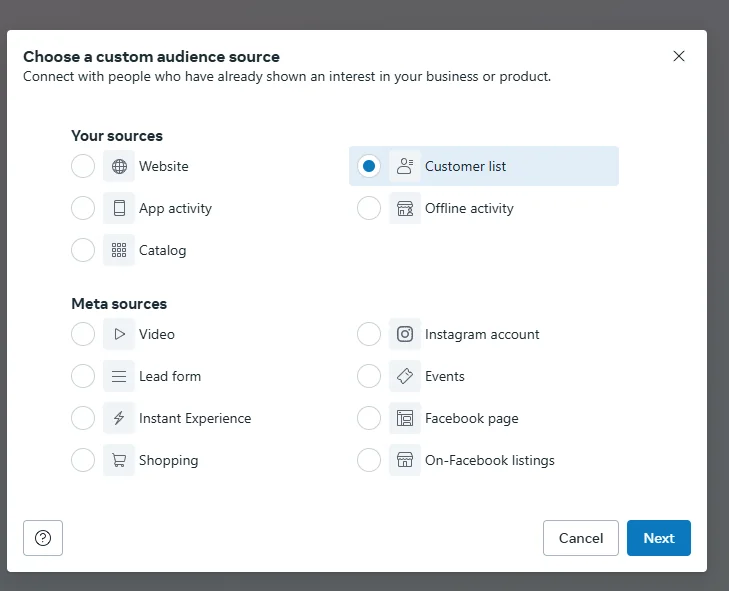
While list-based retargeting requires an existing database, it allows for precise audience targeting.
Dynamic retargeting
Dynamic retargeting takes personalization to the next level by automatically showing users ads tailored to the exact products or services they viewed on your website. For instance, if a shopper browsed through some rings but didn’t buy, they’ll later see ads featuring those same rings alongside similar items.
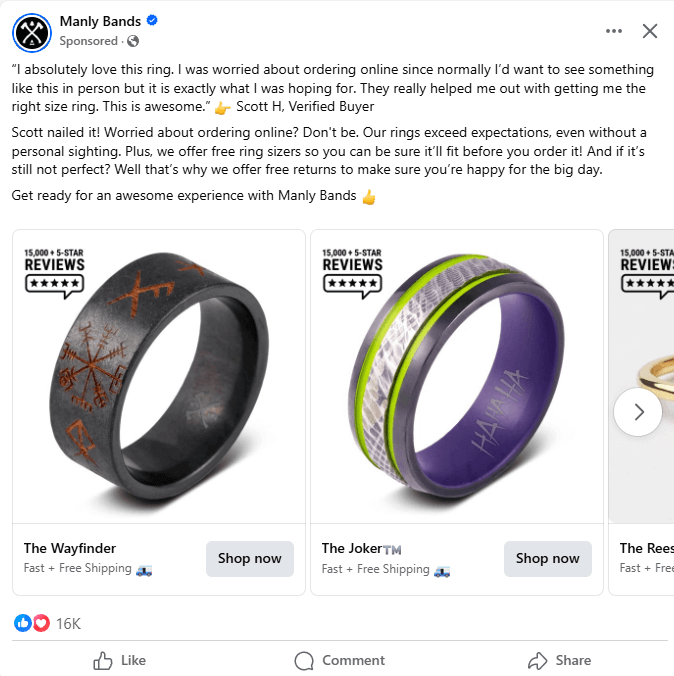
This level of specificity increases the chances of re-engaging the user, as the ads are more relevant than just showing them any product on your site. Dynamic retargeting is particularly effective for e-commerce brands with large product catalogs.
Social media retargeting
Social media retargeting targets users on platforms like Facebook, Instagram, LinkedIn, or X based on their interactions with your brand. While they typically support the other retargeting types above, you can also target users who engage with your social content, like watching a video or liking your posts.
Platforms for retargeting ads
To enjoy the full benefits of retargeting, you need to choose the right platform to reach your audience effectively. Let’s take a closer look at some of the most powerful retargeting platforms available.
Google ads
Google ads is one of the most versatile platforms for retargeting, thanks to its vast reach across the Google Display Network, Search Network, and YouTube. With Google ads, you can target users who’ve visited or interacted with your brand by serving ads on millions of partner websites, mobile apps, and Google search results.
One standout feature is Google’s dynamic remarketing, which lets you automatically show users ads featuring the specific products or services they viewed on your site. This ensures relevance and increases the likelihood of conversion. Whether you’re aiming for broad visibility or hyper-targeted campaigns, Google ads offer robust tools to help you re-engage your audience at every stage of their journey.
Facebook ads
Facebook retargeting ads are a powerhouse for retargeting, offering advanced audience targeting options and tools to help you connect with users where they’re most active. Facebook’s pixel makes it easy to track website visitors and serve ads based on their behavior, such as pages they’ve browsed or products left in their carts.
With Facebook’s detailed analytics and flexible ad formats, you can create campaigns that keep your brand in front of the right people.
Instagram ads
As part of Meta’s ecosystem, Instagram ads leverage the same powerful targeted advertising tools as Facebook ads but focus on a visually-driven audience.
This platform excels at showcasing visually appealing campaigns that grab attention and drive engagement. Whether it’s showcasing your latest collection, offering exclusive deals, or simply reminding users of your brand, Instagram ads make retargeting feel seamless and natural.
How to Set Up a Retargeting Campaign
- Install your tracking tag. Add the platform pixel to every page and confirm it fires on key actions such as product views and purchases.
- Build your audiences. Create groups for product viewers, cart abandoners and past buyers, and exclude anyone who has already purchased.
- Choose a window. Pick how long people stay in an audience, with shorter windows for hot actions like carts and longer ones for casual visits.
- Write matching creative. Show the product they viewed, remind them of the benefit and add a clear call to action.
- Set a frequency cap. Limit how often one person sees the ad so it does not turn into annoyance.
- Review and adjust. Check results weekly and move budget toward the audiences that convert best.
Start small with one or two audiences, because it is easier to fix a simple setup than a complicated one.
How Much Does Retargeting Cost?
Retargeting costs depend on the platform, the size of your audience and how competitive your market is. Most platforms charge per click or per thousand impressions, so your spend goes up as more people see your ads.
Four things move the price:
- Audience size. Very small audiences can raise costs because the platform has fewer people to show your ads to.
- Competition. If many brands target the same shoppers, bids rise.
- Creative quality. Ads people click on earn lower costs from the platform.
- Frequency. Showing the same person too many ads wastes money and can raise your cost per result.
Retargeting audiences are usually small and warm, so a modest daily budget is often enough to start. Judge success by cost per purchase and return on ad spend rather than by cost per click alone.
Challenges and solutions in retargeting
While retargeting ads are incredibly effective, they’re not without their challenges. From overexposing your audience to navigating privacy regulations and attribution woes, there are hurdles to overcome.
The good news? With the right strategies, these issues are easy to fix.
Ad fatigue
We all get sick of seeing the same things over and over again—and when that happens on an advertising level, it can create ad fatigue.
Ad fatigue happens when your audience sees the same ad too often, causing them to lose interest at best and become annoyed at worst. This can also lead to banner blindness, where people consciously (or subconsciously) ignore your ad on different websites or apps.
Luckily, the answer to this problem is pretty simple: refresh your ad creatives often. You can do this by:
- Tweaking your ad copy or offer wording
- Testing out a fresh call to action (CTA)
- Switching up your color scheme
- Experimenting with new ad formats and ad designs
Privacy concerns
As marketers and advertisers, we do a lot to tailor our marketing efforts to be as personalized as possible. But personalization can occasionally run across its greatest opponent in 2025: privacy laws and regulations.
Regulations like GDPR in Europe and CCPA in California have redefined how businesses can collect, store, and use consumer data. These laws require explicit consent for data collection and give users the right to opt out of tracking, which directly impacts retargeting strategies.
In addition, companies like Apple have implemented additional preventative tracking measures (like the iOS 14 updates) that put an additional hamper on the data you can collect from your website visitors.
So, what's a good marketer to do? In this case, simply comply with all regulations about your users' privacy. You should also ensure that you:
- Use clear opt-in mechanisms, like cookie pop-ups or permission requests, to ensure users knowingly agree to data tracking and collection.
- Shift your data collection strategies to collect data directly from your audience through methods like sign-ups, subscriptions, or loyalty programs for more reliable and compliant audience targeting.
- Implement tools like Meta’s Conversions API to maintain accurate tracking without relying on third-party cookies.
Navigating the privacy regulation landscape can be tricky, but doing so prevents your business from encountering any legal trouble in the future.
Attribution issues
Imagine this scenario: A marathon runner trains for months using protein shakes, extra workouts, new running shoes, and a better diet.
When they set a personal best on race day, it’s hard to pinpoint which factor made the biggest difference—was it the shakes, endurance training, or better gear?
In the same way, marketers face attribution challenges in retargeting. Every touchpoint—ads, emails, or social posts—contributes to success, but figuring out which had the greatest impact is the tricky part.
Accurate attribution is essential for understanding which strategies are working and where to allocate your budget. Without it, you might mistakenly pour resources into underperforming campaigns while neglecting the channels driving actual results. This can lead to inefficiencies, wasted ad spend, and an incomplete understanding of your customer journey.
While attribution challenges can feel overwhelming, the good news is that there are effective strategies and tools available to help you untangle the data and pinpoint what’s driving your success.
- Move beyond last-click attribution by using models that assign credit across multiple touchpoints, such as linear attribution (equal credit to all interactions) or time-decay attribution (more credit to recent interactions).
- Pay attention to metrics like assisted conversions, which show how earlier interactions contributed to a final sale, even if they weren’t the last touchpoint.
Best practices for retargeting ads
Now that you know what retargeting is and some of the challenges, let's focus on some of the top strategies you should use to create successful retargeting campaigns in 2025.
1. Target across all levels of the funnel
Retargeting works best when you engage users at every stage of their journey, not just the sales-ready ones. At the top of the funnel, focus on educating and building awareness; in the middle, highlight product benefits and social proof; at the bottom, drive urgency with special offers or limited-time discounts.
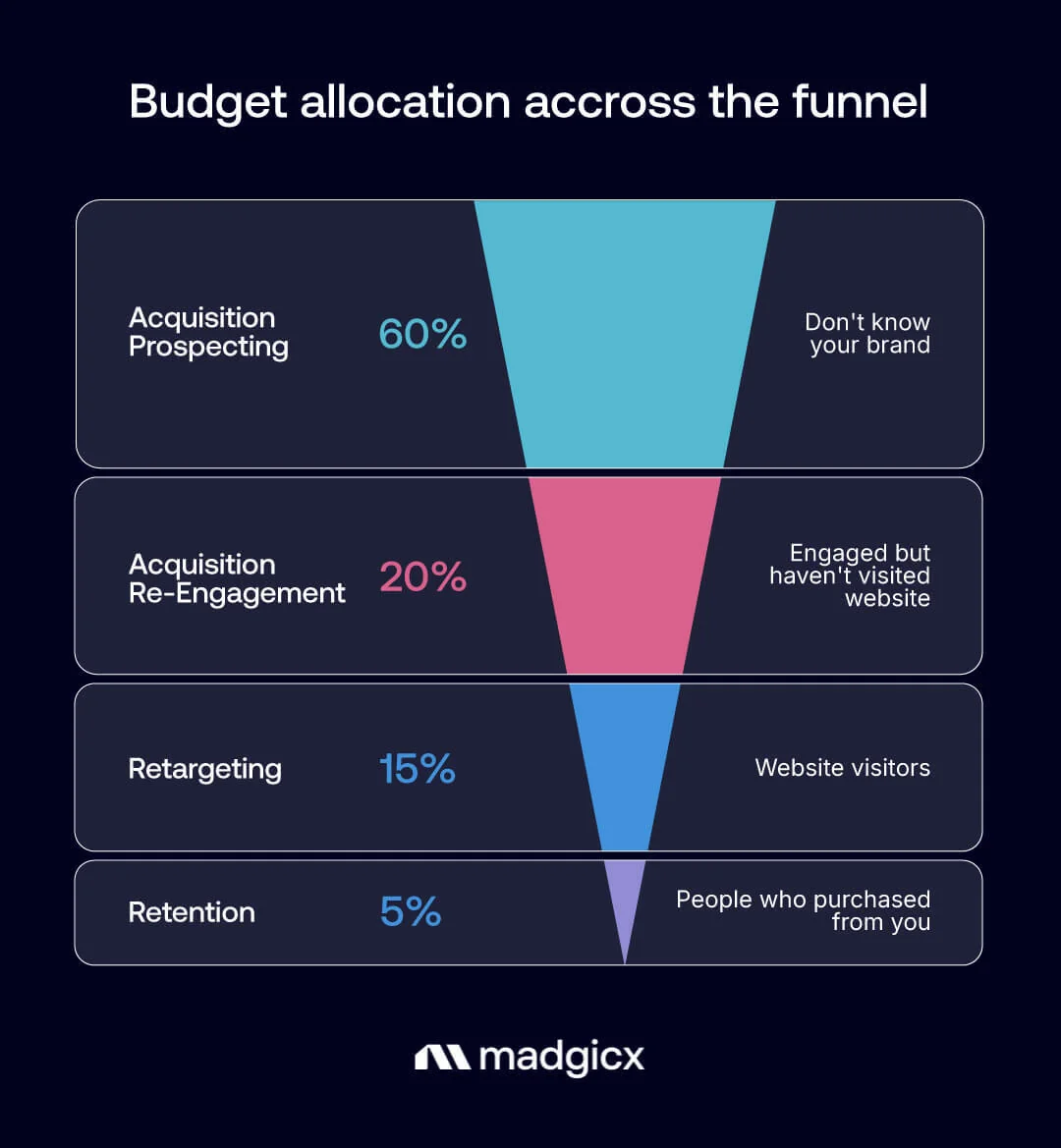
To streamline this process, you can use tools like Madgicx's Audience Launcher to quickly create precise audience segments for each funnel stage, ensuring your message resonates at the right time.
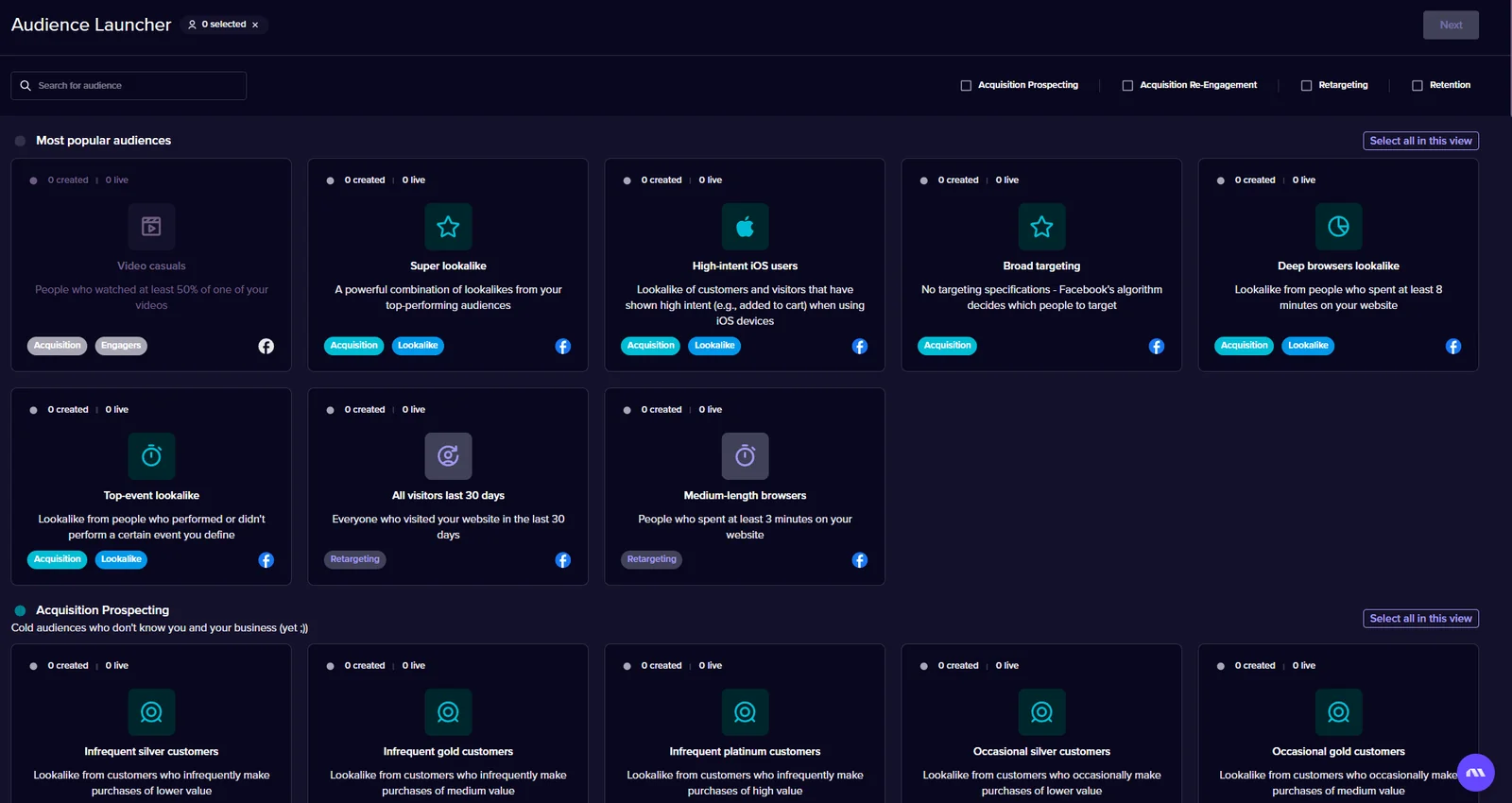
With over 50 pre-made ad targeting (and retargeting) audience segments, you can launch your campaigns in an instant without having to worry about audience overlap or setting them up one by one.
2. Rotate ad creatives regularly
Keeping your ads fresh is critical to avoiding ad fatigue, where users become desensitized to seeing the same ad repeatedly. Regularly update your visuals to include new imagery, animations, or even user-generated content that feels more relatable.
Unfortunately, not every company has the extra time (or budget) required to keep up with a steady stream of fresh creatives. If you’re in that category, Madgicx’s AI Ad Generator is about to be your new best friend.
Simply upload any product or inspiration images you have (or choose from the thousands in the Madgicx Ad Library), add some instructions, and voila! You’ll have a curated ad delivered to your screen in seconds.
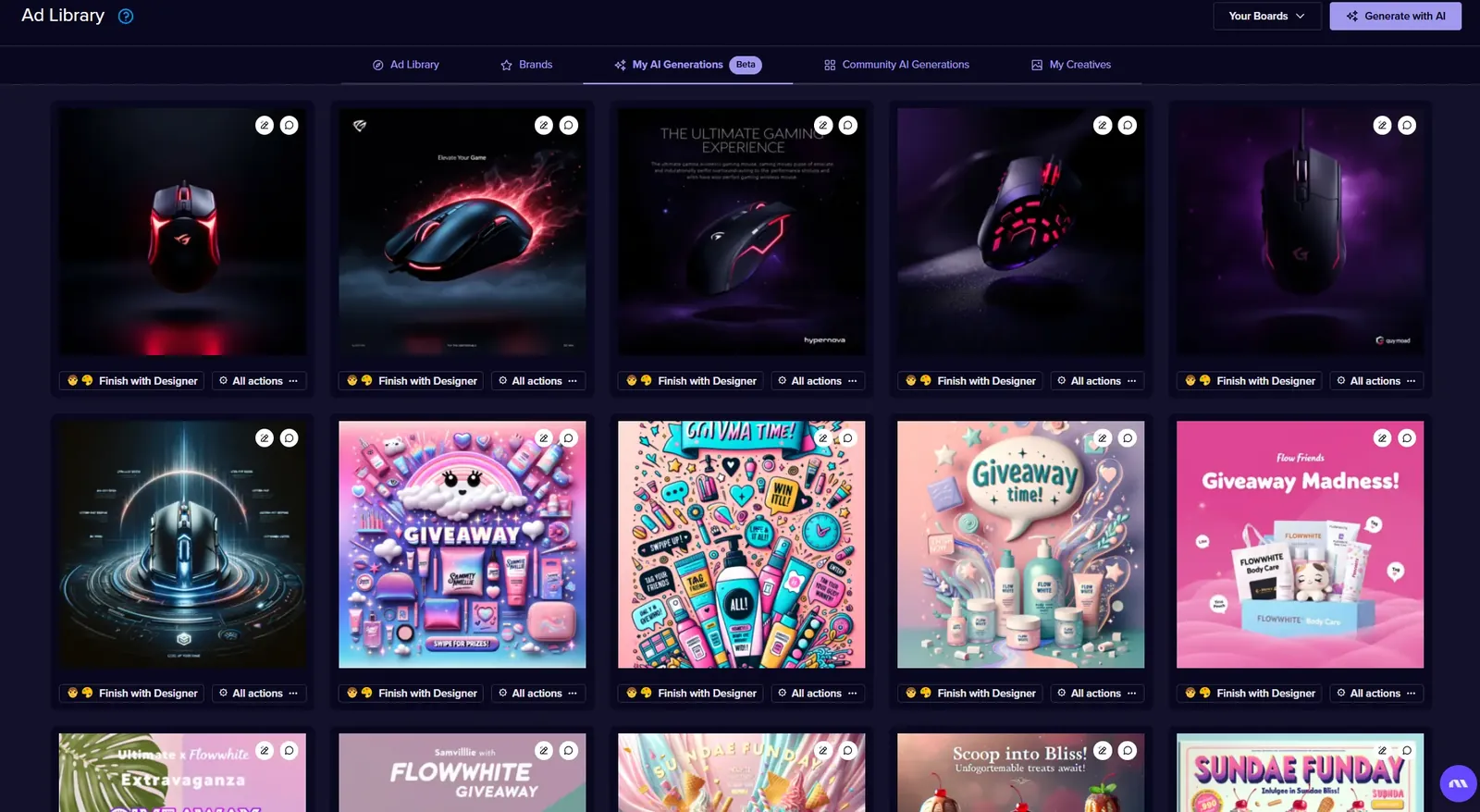
We should also mention that you can try both the AI Ad Generator the Madgicx Ad Library for free ;)
3. Use dynamic retargeting
Personalization is key. Dynamic retargeting shows users ads featuring the exact products or services they’ve interacted with, increasing relevance and the likelihood of conversion.
4. Optimize ad frequency
Use frequency caps to control how often a user is exposed to your ads within a specific time frame. For example, limiting impressions to three to four times per week can help maintain engagement without crossing into spam territory. Regularly monitor your campaign metrics to adjust frequency based on performance to ensure your audience stays engaged without feeling bombarded.
5. Leverage multiple platforms
Your audience spends time across various platforms, so your ads should, too. Creating retargeting campaigns on Google, Facebook, Instagram, and other social media platforms allows you to reach users wherever they browse, scroll, or search.
6. Test and optimize campaigns
No two audiences are the same, so testing is essential to finding what works best for your retargeting campaigns. Experiment with different ad formats, such as carousel ads, video ads, or Stories, to see which drives the most engagement.
7. Focus on mobile-friendly ads
With a significant portion of users browsing on mobile devices, creating mobile-optimized ads is no longer optional—it’s essential. Design vertical or square ads that fit seamlessly into mobile feeds, ensuring your content looks great on smaller screens. Prioritize quick load times to avoid losing users due to slow performance, and use clear, concise CTAs that are easy to act on, like “Shop Now” or “Learn More.” Consider leveraging mobile-friendly ad formats like Instagram Stories or Reels, which are designed for quick, immersive interactions.
Retargeting FAQs
Is retargeting worth it for small businesses?
Yes, because retargeting only needs a small audience and a small budget. Warm visitors tend to convert better than cold ones, so even a few dollars a day can recover sales you would have lost.
How long should a retargeting campaign run?
Run it continuously with audience windows that match the buying cycle. Cart abandoners may need only a week, while product viewers can stay in the audience longer.
Do retargeting ads follow people forever?
No. Audience windows and frequency caps control how long and how often someone sees your ads, and you can stop showing them once the person buys.
What is the difference between retargeting and remarketing?
Retargeting usually means paid ads shown to past visitors, while remarketing often refers to email and other direct messages to people who already gave you their details. Many brands use both together.
Conclusion
By reconnecting with users who’ve already shown interest, retargeting ads help you stay top-of-mind, deliver personalized experiences, and turn “maybe later” into “add to cart.”
With platforms like Google, Facebook, and Instagram in your corner, you’ve got all the tools you need to craft campaigns that feel relevant and timely. Sure, challenges like ad fatigue and privacy concerns pop up, but with smart planning (and maybe some killer dynamic ads), you’ll keep your audience engaged and coming back for more.
So, don’t leave your audience hanging—get started and let retargeting do the heavy lifting!