What Facebook ads can and cannot say, which categories are restricted, how ad review and appeals work, and a checklist to run before you launch.
To check whether your ads comply with Facebook's policies, test each ad against Meta's Advertising Standards: it must not be on the prohibited list, any restricted category must meet its extra rules, the copy and image must not make misleading claims or point at personal attributes, and the landing page must match the ad. Meta reviews every ad against these rules when you place your order, usually within 24 hours.
This guide sorts the Facebook ad guidelines by type of content, with a checklist to run before you launch and the steps to take if an ad is rejected. Meta changes its policies often, so confirm any rule on Meta's Advertising Standards before you rely on it.
AI Marketer audits your Meta account daily and recommends what to change. You approve each one.
What are the Facebook ad guidelines?
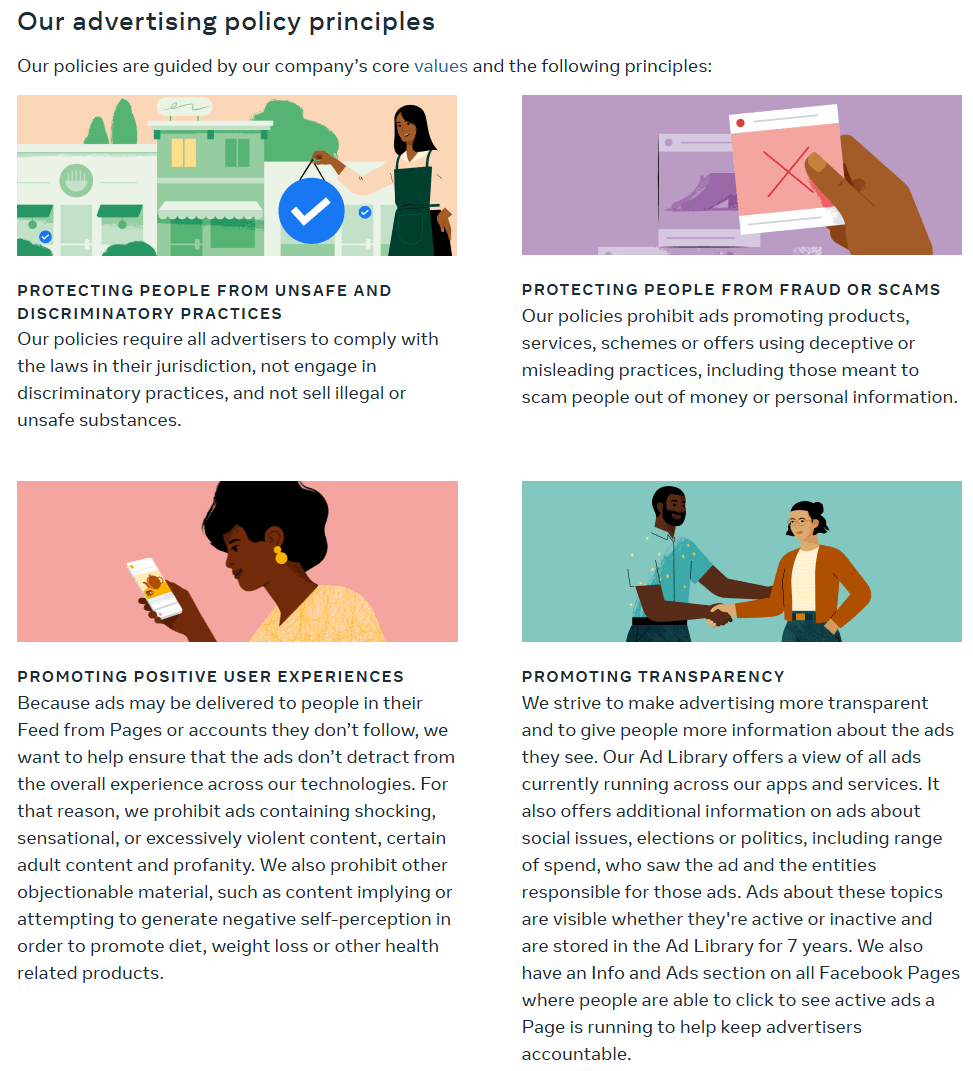
Facebook ad guidelines are officially called Meta's Advertising Standards. They set which ads can run on Meta's apps and services, including Facebook, Instagram, Messenger and the Audience Network. The goal is a safe, transparent place to advertise, with no misleading or harmful ads.
Three points matter most in practice:
- Each ad is reviewed against the policies when you place your order, and ads may be reviewed again after they go live.
- You are responsible for understanding and following the Advertising Standards and Meta's Terms of Service.
- Meta may restrict advertiser accounts that do not follow the Advertising Standards, Community Standards or other policies, and it watches advertiser behavior beyond single ads.
Before you open Ads Manager, read the policy pages for your category. It saves far more time than it costs.
What is not allowed in a Facebook ad?
Prohibited content never runs, whatever the ad says. Meta's standards rule out ads that contain or promote:
- Illegal products and services, such as drugs, weapons and counterfeit goods.
- Tobacco and related products, including vapes.
- Unsafe supplements and other unsafe substances.
- Adult content, including sexually explicit imagery.
- Discriminatory practices, against people based on attributes such as race, religion or disability.
- Misleading or deceptive content, including misinformation and clickbait.
- Shocking or excessively violent content and profanity.
- Fraud and scams, including exaggerated claims about a product's success to mislead people into buying.
Meta says it often sees violations in schemes related to investment or banking, health or weight loss, misleading free offers, and products with functions that do not exist. Ads can't use the image of a famous person with misleading tactics to bait people into engaging.
Which Facebook ad categories are restricted?
Restricted content can run, but with extra requirements such as age limits, authorization or approval from Meta, and local legal compliance. Common restricted categories include alcohol, dating, gambling, cryptocurrency, financial services, and health and wellness. Each has its own policy page, so read the one for your category before you build the ad.
Health, weight loss and cosmetic ads
This category is the source of many rejections, and the one most advertisers search for. Meta's health and wellness policy sets these rules:
- Ads for weight loss or weight gain products, or for cosmetic products or procedures, can't contain statements of inferiority about physical appearance.
- Ads for dietary, health, or weight loss or weight gain products must be targeted to people aged 18 or older. So must ads for cosmetic products, procedures or surgeries.
- The age rule does not apply to general food products, including protein products, or to non-permanent cosmetic and beauty products such as creams, make-up and hair products.
- Ads can't use clickbait tactics in a health or weight loss context.
- Ads can't claim to cure, heal or eliminate listed incurable diseases, including diabetes, cancer, autism and HIV.
Write benefits as what the product does, not what is wrong with the viewer, and keep claims you can support.
Financial products and services
- Ads for credit cards, loans or insurance must be targeted only to people aged 18 or older.
- You must verify your business or identity and show regulatory authorization where required. You may need a license in each country you target.
- Ads can't promote payday loans, salary advances, bail bonds or short-term loans of 90 days or less, nor binary options, contracts for difference, initial coin offerings or penny auctions.
- For ads that target the United States, only an accredited brokerage or licensed financial advisor verified through Meta's process can promote investment products.
- Since January 21, 2025, campaigns for financial products and services in the United States must use the Financial products and services Special Ad Category, and ads may be rejected if you do not choose the right one.
Which text, image and video rules apply to ad creative?
Whatever your category, the creative must follow these basics:
- No exaggerated or deceptive claims about results, health or earnings.
- No shocking, sensational or violent imagery.
- No clickbait headlines that promise something the ad does not deliver.
- No implied knowledge of a viewer's personal traits.
Personal attributes and targeting
Meta's rules prohibit ad copy that asserts or implies personal attributes such as race, health, financial status or identity. Personalization is fine; implying you know something sensitive about the viewer is not.
| Likely to be flagged | Safer version |
|---|---|
| "Struggling with anxiety? Try this treatment." | "Discover new ways to manage stress." |
| "Are you drowning in debt? We can help." | "Learn smart strategies for managing your finances." |
| "Are you over 50 and worried about retirement?" | "Helpful retirement planning tips for every stage of life." |
Ads for housing, employment and credit opportunities are also covered by the Discriminatory Practices policy, and choosing a Special Ad Category adds audience restrictions to the campaign. You can browse real ads in the Facebook Ad Library to see how other brands word sensitive offers.
What landing page requirements does Facebook enforce?
The ad and the page it opens must agree. Check three things before launch:
- The offer, price and claims on the page match the ad.
- The page has no prohibited or misleading content.
- The page loads fast and is easy to use on a phone, since that is where most people will see it.
The landing page analyzer can scan a page for issues that hurt conversion before you send paid traffic to it.
How does the Facebook ad approval process work?
- Submission and review. Each ad is reviewed against the policies when you place your order. The review is typically completed within 24 hours, though it can take longer, and the ad shows as "In review".
- Decision. An approved ad starts delivering. A rejected ad comes with a reason, and you are typically given the chance to edit it to comply.
- Re-review. Ads can be reviewed again, including after they go live, so a live ad can still be disapproved.
- Appeal. If you think the decision is wrong, you can request a review in Account Quality.
What should you do after an ad is rejected?
- Read the reason in Account Quality and find the matching policy page.
- Edit the ad to fix the exact issue: the claim, the image, the targeting or the landing page. Submit it as a new version.
- If you believe the ad follows the rules, request a review and explain why.
- Check your other live ads for the same issue before Meta flags them.
Appeals and account risk
Repeated violations can lead to restrictions on your ad account or business assets, and Meta may ask for extra verification when it sees suspicious behavior. Do not make new accounts to get around a restriction. You can request a review of a restricted asset in Account Quality.
A compliance checklist before you launch Facebook ads
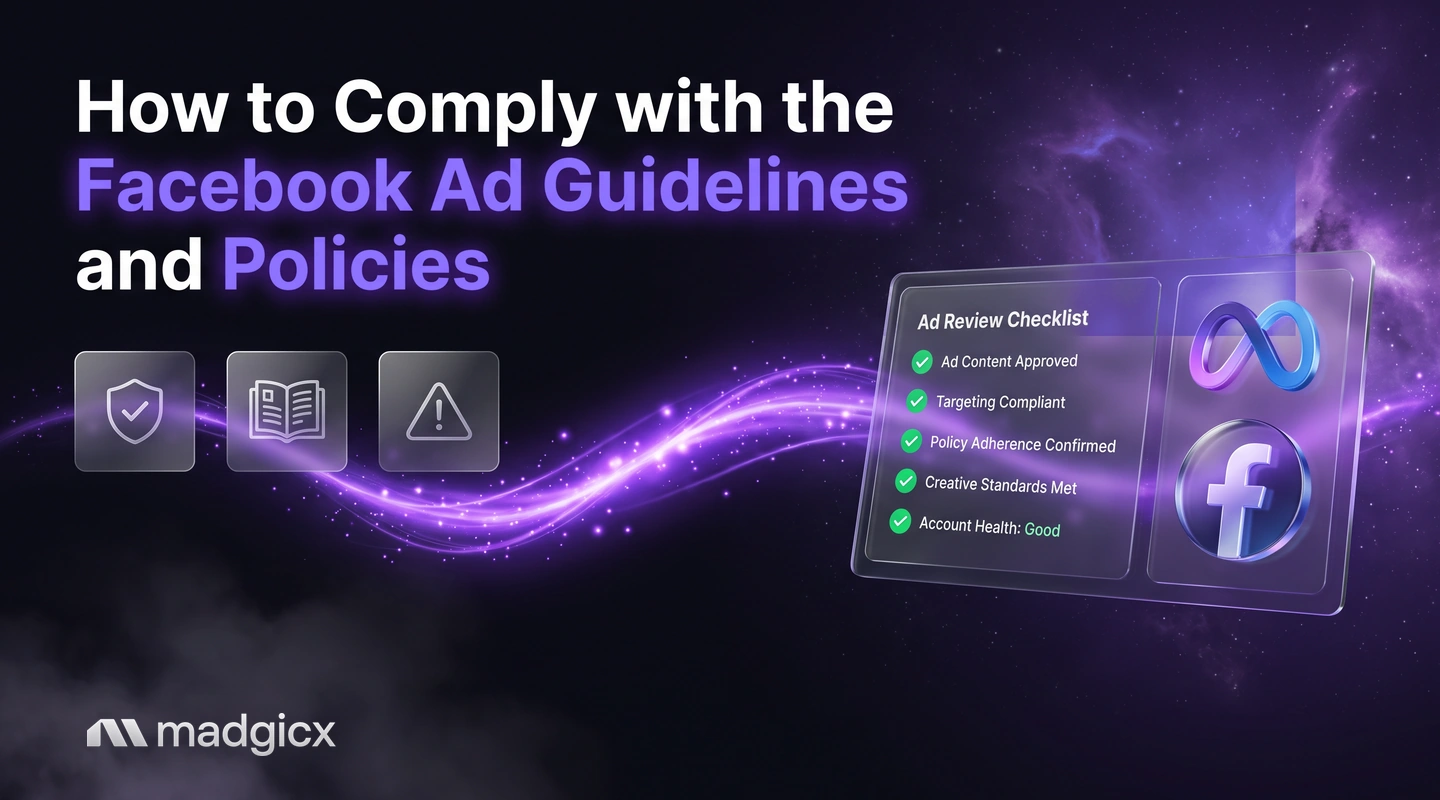
- My product or service is not on the prohibited list.
- If it is in a restricted category, I have read that category's policy page and have any approval or verification needed.
- The copy makes no misleading, exaggerated or clickbait claims.
- The copy and image do not point at personal attributes.
- The creative has no shocking imagery.
- The landing page matches the ad and is free of banned content.
- Age targeting meets the category's minimum.
- Housing, employment or financial ads use the right Special Ad Category.
- I have a plan to check Account Quality for rejections after launch.
Stay on top of your Facebook ads with Madgicx
Madgicx does not decide whether an ad follows Meta's policies; Meta's review does. What Madgicx adds is the everyday work around it. Copilot answers questions about your ad account from your own data, so you can check which ads are active and how they perform. The Needs attention list shows what needs a look, including Meta's own recommendations, and AI Marketer prepares recommendations you approve. To plan the wider picture, read our guide to a Facebook ad strategy.
FAQ
Are these ads compliant with Facebook's policies?
Check each ad against Meta's Advertising Standards: it must not be prohibited, any restricted category must meet its extra rules, the claims must be honest and the landing page must match. Meta's review makes the final decision, usually within 24 hours.
What is not allowed in a Facebook ad?
Illegal products and services, tobacco, unsafe supplements, adult content, discriminatory practices, misleading or deceptive claims, and shocking or excessively violent content are not allowed.
What are the restrictions on Facebook ads?
Restricted categories such as health, financial services, alcohol, dating, gambling and cryptocurrency can run with extra requirements, such as age limits, verification or approval from Meta.
What are the rules for weight loss ads on Facebook?
Ads must be targeted to people aged 18 or older, can't use statements of inferiority about appearance, can't use clickbait and can't claim to cure listed diseases.
How do I appeal a rejected Facebook ad?
Open Account Quality, find the decision and request a review. You can also edit the ad to fix the issue and resubmit it.